Dating App Openers That Actually Get Replies

If you’ve ever stared at a new match and thought, “What am I even supposed to say here?” you’re not alone. Most people on Tinder, Bumble, Hinge, OkCupid, and Facebook Dating don’t struggle because they have no matches. They struggle because the first message feels weirdly high stakes.
Too generic, and you get ignored. Too intense, and it feels forced. Too clever, and it can sound copied.
The good news: strong dating app openers are not magic. They follow a few simple patterns. The best ones feel personal, easy to answer, and natural enough to lead into a real conversation.
This guide breaks down exactly what makes a dating app opener work, which types of openers tend to get better replies, what mistakes silently kill momentum, and how to turn an opener into an actual conversation. If you want faster help with openers, replies, pickup lines, or profile feedback, Dating Help AI can generate personalized suggestions in seconds right in your browser, with no signup and no app install required.
For faster hands-on help, try the dating app opener generator, the AI reply generator, or the pickup line generator.
Why Most Dating App Openers Fail
Most openers fail for one simple reason: they make the other person do all the work.
Messages like these are everywhere:
- Hey
- Hi :)
- How are you?
- What’s up
- You’re gorgeous
- I never know what to say on here lol
None of these are automatically terrible. They’re just low-signal. They don’t show attention, personality, or direction. On a busy app, that means they blend in with the inbox clutter.
A good opener does at least one of these things:
- shows you actually noticed something
- gives them an easy way to respond
- creates a light emotional reaction like curiosity or a smile
- sets up the next step in the conversation
WhichDating reports from its own reviewer dataset that generic greetings drew roughly 10-14% response rates, while profile-specific question openers reached 45%. Treat this as directional industry data, not a universal benchmark. Source: WhichDating opening-lines analysis.
That gap is the whole game.
What Competitor Advice Gets Right - and What It Misses
A lot of advice around dating app openers repeats the same broad points:
- personalize your message
- ask a question
- be funny if you can
- avoid boring greetings
- mention something from their profile
That advice is directionally right. But many articles stop there.
What they often miss is the deeper part: an opener is not just a line, it is a conversation design choice. The best first message is the one that makes the second and third message easier. That means you should judge an opener by more than whether it sounds clever.
The biggest content gaps most articles miss
1. They focus too much on the opener and not enough on momentum
A good opener should make follow-up easy. If the reply comes in, you should already know where to take it next.
2. They give examples without showing why they work
Templates are useful, but understanding the structure is what lets you adapt naturally across different matches and apps.
3. They ignore platform differences
What works on Hinge often differs from what works on Tinder or Bumble because profile depth, user intent, and conversation norms vary.
4. They overlook timing and friction
Short, relevant, easy-to-answer messages often outperform “impressive” ones that feel heavy or rehearsed.
5. They rarely connect openers with AI workflow
Today, many daters want practical help fast. Instead of overthinking every message, a tool like Dating Help AI can analyze your screenshot or pasted chat and generate context-aware opener ideas or replies in seconds. That matters when you want help across multiple apps without downloading yet another tool.
The Psychology Behind Dating App Openers That Get Replies
Good dating app openers work because they reduce uncertainty and create a low-effort path to engagement.
Here’s what’s happening underneath:
Recognition
People respond better when they feel seen as an individual, not processed like another profile in a swipe queue.
Cognitive ease
The easier it is to answer your message, the more likely you are to get a reply.
Emotional spark
Humor, curiosity, warmth, and playfulness all increase the chance that your message feels memorable instead of disposable.
Social safety
Openers that are respectful, relaxed, and not overly sexual create safer early interaction. That matters more than many people realize.
Dating Industry Insights summarizes platform-message research as showing profile-specific messages above 50% response rates versus below 30% for simple "hey" or "hi" messages. Treat this as secondary industry analysis, not a guaranteed result. Source: Dating Industry Insights first-message research.
The Core Traits of Strong Dating App Openers
Before looking at types of openers, it helps to know the traits that strong ones share.
- Trait: Specific | Why It Matters: Shows real attention | Quick Example: “Your bookstore photo sold me.”
- Trait: Easy to answer | Why It Matters: Reduces reply friction | Quick Example: “What’s your current favorite read?”
- Trait: Lightly playful | Why It Matters: Adds warmth and energy | Quick Example: “Be honest: did the dog choose that photo?”
- Trait: Short | Why It Matters: Feels natural on apps | Quick Example: 1 to 2 sentences usually works
- Trait: Forward-moving | Why It Matters: Helps conversation continue | Quick Example: “What’s the story there?”
- Trait: Authentic | Why It Matters: Feels like a human, not a script | Quick Example: “That hiking photo looks unreal.”
A lot of users think they need a brilliant line. Usually, they just need a line that feels observant and easy to answer.
The 6 Types of Dating App Openers That Actually Work
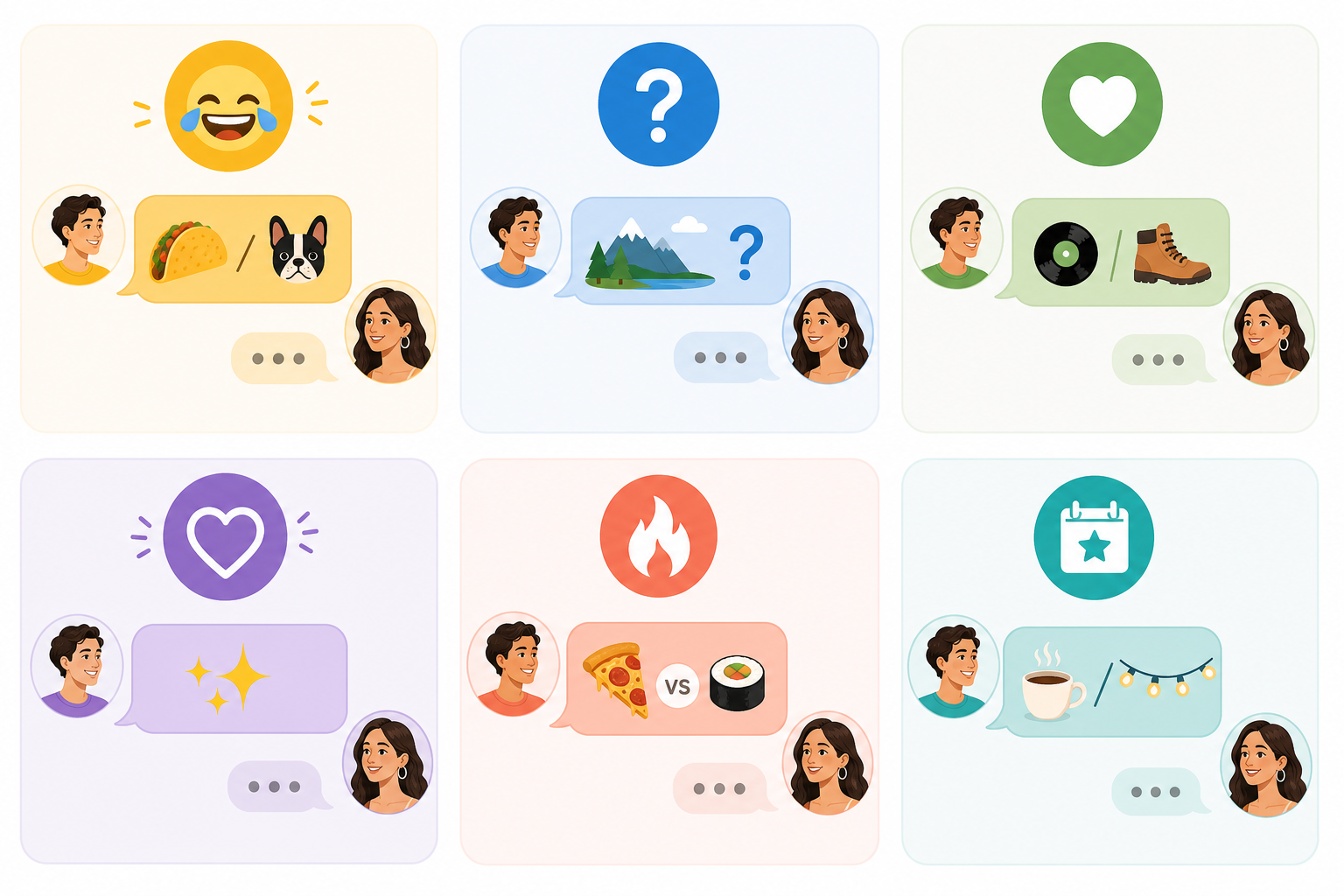
1. The Profile-Based Opener
This is the most reliable style because it instantly shows effort.
You notice something in their profile and turn it into a comment or question.
Why it works
- feels personal
- gives them an obvious reply path
- separates you from generic messages
Examples
- “You’ve got great taste in travel spots. Was that Lisbon in your third photo?”
- “You mentioned you’re into pottery. How did you get into that?”
- “Your prompt about always ordering fries as a side felt extremely correct.”
Best use case
Use this whenever the profile gives you anything specific to work with.
2. The Observation + Question Opener
This is a small upgrade from pure personalization. You make an observation first, then ask a question.
Why it works
The observation creates warmth. The question creates momentum.
Examples
- “You seem like someone who actually has fun when you travel, not just airport-and-hotel travel. What’s your favorite trip so far?”
- “Your profile has strong ‘will absolutely win game night’ energy. What’s your best game?”
- “That sushi photo convinced me you probably know the good spots. What’s your go-to order?”
Best use case
Great on Hinge and Bumble, where people usually expect a little more personality.
3. The Playful Tease Opener
This style adds light, non-mean banter based on something harmless in their profile.
Why it works
- creates chemistry faster than interview-style questions
- feels fun without trying too hard
- sets a flirtier tone when done well
Examples
- “You say you’re competitive, which feels like a warning disguised as a fun fact.”
- “I’m a little suspicious of anyone who says pineapple on pizza is elite. Defend yourself.”
- “Your dog is doing a lot of heavy lifting in these photos, but I respect the strategy.”
Best use case
Use only if their profile tone feels playful enough to support it.
4. The Shared Interest Opener
This opener highlights something you actually have in common.
Why it works
Shared ground makes the conversation feel more natural and less like performance.
Examples
- “You’re into horror movies too? Finally. What’s your top pick when you want something genuinely creepy?”
- “I saw you like weekend hikes. Same. Are you more sunrise-hike person or slow-coffee-after person?”
- “You’re learning Spanish too? I feel less alone already. What app or method are you using?”
Best use case
Best when the overlap is real. Forced commonality reads as fake quickly.
5. The Thoughtful Question Opener
This type uses an open-ended question that gives someone room to show personality.
Why it works
It leads to better conversations than yes-or-no questions and makes your message easier to answer with substance.
Examples
- “What’s something you’ve gotten really into lately that surprised you?”
- “If you could instantly get good at one hobby, what would you pick?”
- “What’s the most underrated way to spend a Sunday?”
Best use case
Useful when the profile is light and doesn’t give you much to work with.
6. The Soft Date-Frame Opener
This one subtly introduces the idea of doing something together, without being pushy.
Why it works
It creates forward momentum and helps avoid endless app chat.
Examples
- “You mentioned loving bookstores and coffee, which feels like a pretty solid first-date blueprint.”
- “If your taco opinions are strong, this sounds like something that should probably be debated in person.”
- “You had me at mini golf. That feels like a dangerously good first-date activity.”
Best use case
Best after a small amount of rapport, or when their profile strongly points toward a specific shared activity.
Bad vs Good Dating App Openers
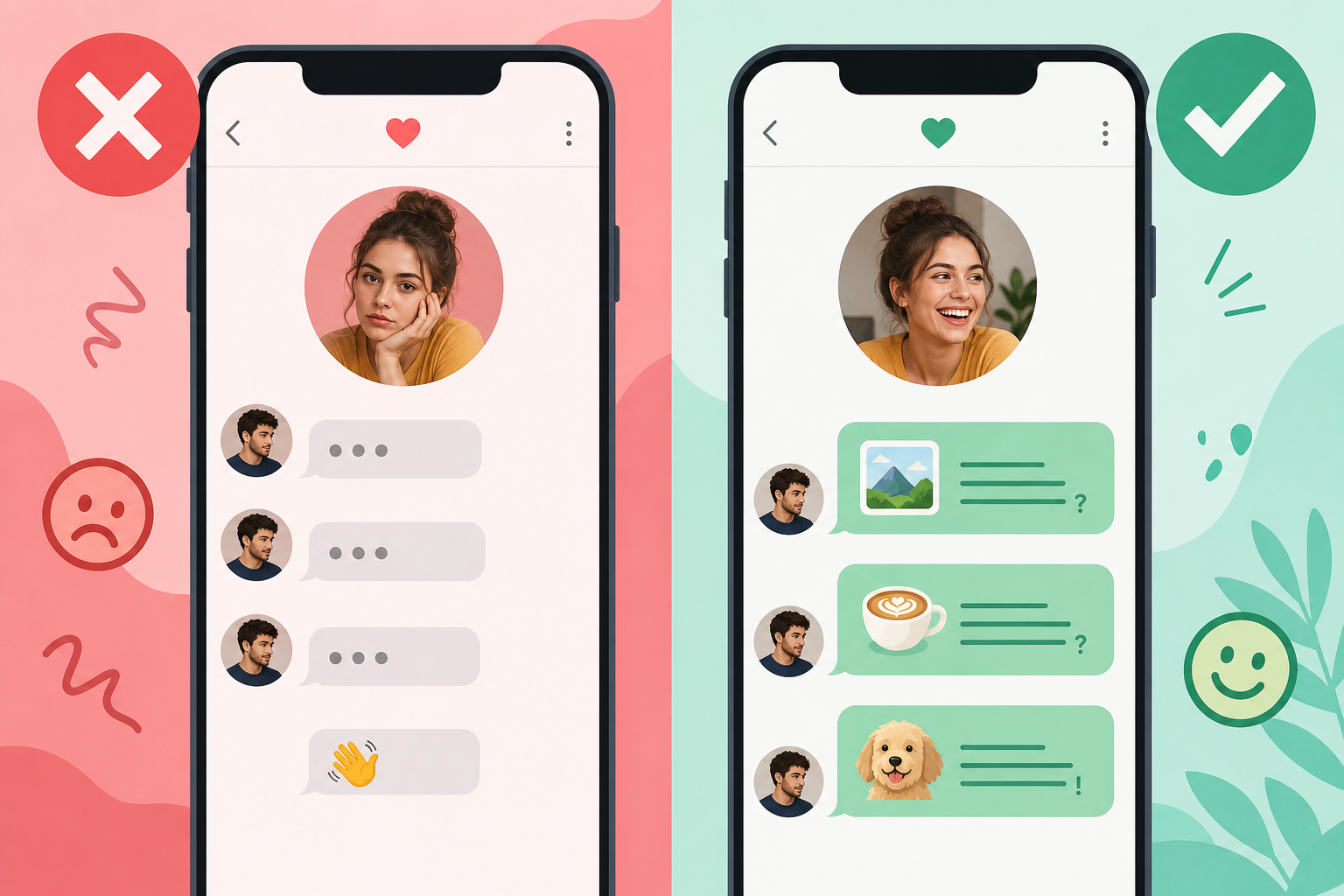
Here’s how weak openers usually differ from strong ones in practice.
- Weak Opener: “Hey” | Why It Underperforms: No direction, no personality | Better Version: “Your profile made me laugh. Is your Sunday ideal more coffee shop or outdoor walk?”
- Weak Opener: “How are you?” | Why It Underperforms: Too generic | Better Version: “You seem like someone who always has a current obsession. What is it right now?”
- Weak Opener: “You’re beautiful” | Why It Underperforms: Overused, low effort | Better Version: “You have a great smile, but honestly the bookstore photo was what got my attention. Favorite section?”
- Weak Opener: “What’s up?” | Why It Underperforms: Lazy framing | Better Version: “I saw you’re into live music. Best show you’ve been to recently?”
- Weak Opener: “Hi gorgeous” | Why It Underperforms: High volume, low originality | Better Version: “You clearly know how to pick good travel destinations. Which one would you go back to tomorrow?”
Common Mistakes That Quietly Kill Reply Rates
Even decent intentions can lead to weak results if the message creates friction.
Writing something too long
Your opener is not the place for a paragraph. Keep it light. Most first messages work best when they are quick to read and easy to answer.
Asking multiple questions at once
Too many questions feels like homework. Ask one good one.
Being too sexual too early
This often lowers trust immediately. Unless the tone is clearly established and mutual, it usually hurts more than it helps.
Copy-pasting something obviously generic
People can tell. Even if a template is good, it needs adapting.
Over-complimenting appearance
A small compliment can work. Leading only with physical praise often feels low-effort because so many people do it.
Trying too hard to sound clever
A natural line beats a forced “perfect” line almost every time.
How to Choose the Right Opener for the App
Different apps reward slightly different styles.
Tinder
Tinder usually rewards fast, punchy, visually driven openers. Keep it light and engaging.
Best fits:
- playful tease
- observation + question
- profile-based opener
Bumble
Because women often initiate or the app culture is a bit more conversational, Bumble works well with openers that feel easygoing but thoughtful.
Best fits:
- observation + question
- shared interest opener
- thoughtful question
Hinge
Hinge gives you more profile material and generally attracts more prompt-based conversation.
Best fits:
- profile-based opener
- thoughtful question
- soft date-frame opener
OkCupid and Facebook Dating
These platforms often provide more profile context, which makes personalization even more valuable.
Best fits:
- shared interest opener
- profile-based opener
- observation + question
How to Turn an Opener Into an Actual Conversation
This is where many people stall. They get the reply, then lose momentum.
A good conversation usually follows this simple sequence:
- opener
- response
- playful or thoughtful follow-up
- small personal share from you
- another question or light escalation
Example flow
You: “Your profile gives strong ‘always knows the best brunch spot’ energy. Am I right?” Them: “Honestly yes, I take brunch very seriously.” You: “That’s the confidence I was hoping for. What place currently holds the title?” Them: “Probably Sunday Supply.” You: “That’s a strong answer. I respect a person with brunch standards.”
Notice what’s happening:
- no giant leap in tone
- no interview vibe
- no pressure
- steady momentum
The goal is not just getting a reply. It’s making the interaction feel enjoyable enough to continue.
A Better Framework Than Memorizing Lines
Instead of memorizing dozens of scripts, use this framework:
Notice
Find one specific thing in their profile.
Interpret
Add a light opinion, assumption, or playful read.
Invite
Ask one easy question or create one easy response path.
That formula looks like this:
Notice + Interpret + Invite
Examples:
- “Your profile has very committed coffee-person energy. What’s your order?”
- “That travel photo looks like an elite choice. Was it as good as it looks?”
- “You seem suspiciously good at choosing restaurants. What’s your current favorite?”
This is easier to repeat than trying to sound original from scratch every time.
When You Have Nothing to Work With
Some profiles give you almost nothing. No bio. No prompts. Basic selfies. Maybe one emoji.
You still have options.
Go with vibe-based observations
- “You seem like you’d either be very good at trivia or very good at pretending to be.”
- “Your profile is low on words but high on mystery.”
- “I respect the minimalist profile approach, but now I need one fun fact.”
Use a simple thoughtful prompt
- “What’s something you always enjoy talking about?”
- “What’s your most elite comfort food choice?”
- “What’s a green flag you notice fast in people?”
Keep it especially short
Low-information profiles call for low-friction openers, not over-engineered ones.
How AI Can Help Without Making You Sound Robotic
This is where modern dating support tools can genuinely help.
Many people know what makes a good opener, but still freeze when it’s time to write one for a real person. That’s because real profiles are messy. Tone varies. Humor varies. Intent varies. You may be juggling multiple apps and not want to spend 15 minutes drafting every first message.
Dating Help AI is useful here because it’s built for speed and context, not generic canned lines.
What makes it practical
- fast AI-generated suggestions in seconds
- no signup required
- browser-based access, so no app install
- works across Tinder, Bumble, Hinge, OkCupid, Facebook Dating, and more
- personalized suggestions based on your actual conversation or match context
- helps with replies, openers, pickup lines, and profile feedback in one workflow
- screenshot upload support for real chat analysis
- privacy-conscious public workflow without a heavy, persistent setup
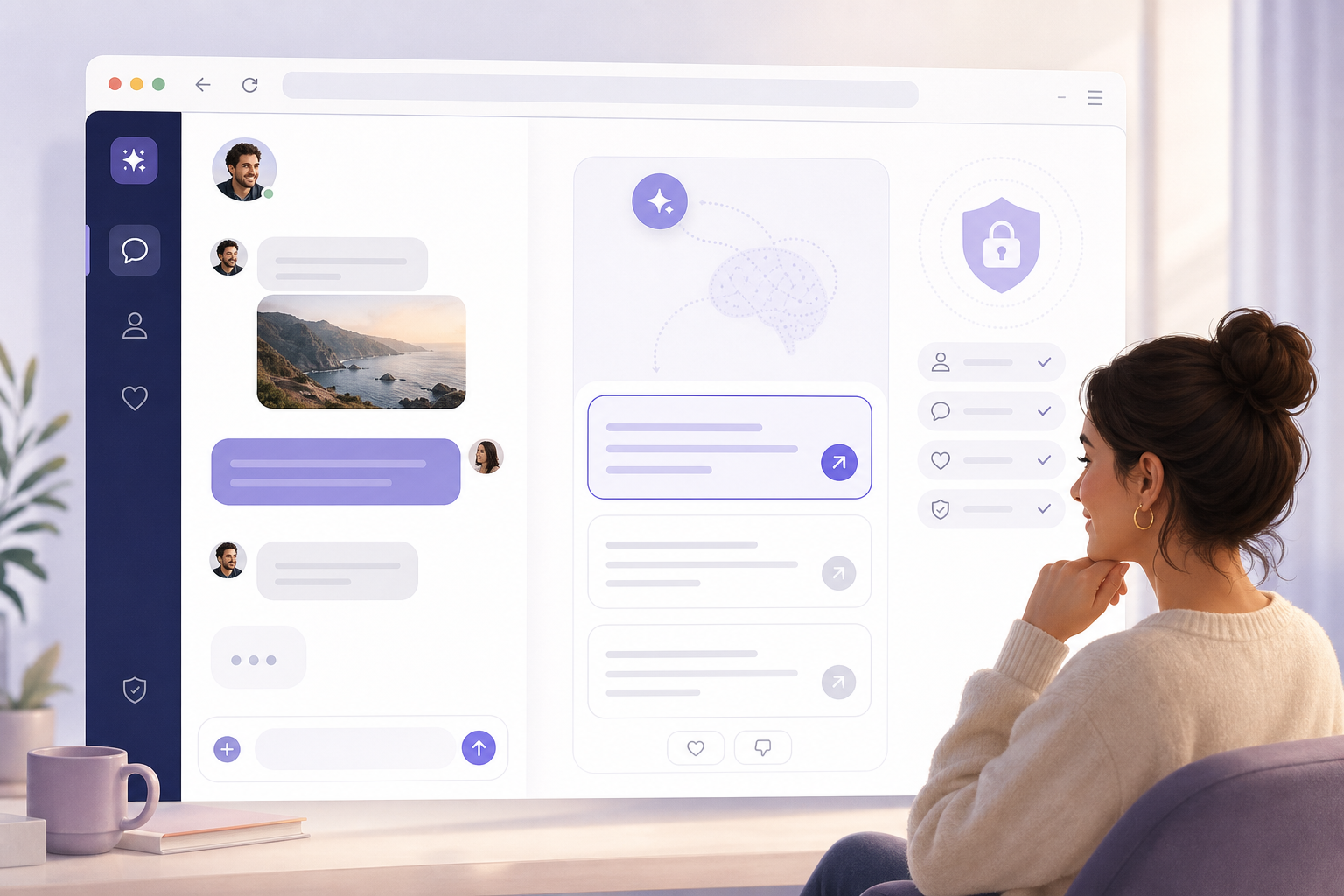
That means if you have a match and don’t know how to open, you can upload a screenshot or paste profile/chat text and get suggestions that fit the tone more naturally. If they already replied and you’re stuck, the same workflow can help you continue the conversation instead of dropping the ball after message two.
Practical Examples You Can Adapt Today
Below are adaptable opener patterns that tend to work well because they are easy to personalize.
If they mention travel
- “You clearly pick better travel spots than most people. Which trip was actually worth the hype?”
- “That travel photo did its job. What place surprised you most in a good way?”
If they mention food
- “Your profile makes me think you have strong restaurant opinions. Accurate?”
- “Important question: what food are you incapable of being casual about?”
If they mention fitness
- “You seem way more disciplined than me already. What workout do you actually enjoy?”
- “I can’t tell if that running photo is inspiring or intimidating.”
If they mention books, music, or movies
- “You had me at your book prompt. What’s one recommendation you never stop giving?”
- “Your music taste might be better than mine, which I don’t say lightly. Current favorite artist?”
- “You mentioned horror movies, so now I need to know your top pick.”
If they have a pet
- “I’m happy to talk to you, but your dog is currently the main character.”
- “Be honest, did your pet improve your match rate by at least 40%?”
If their profile is minimal
- “You’ve given me very little to work with here, so I’m forced to ask one important question: best comfort food?”
- “Minimal bio, strong mystery. Intentional?”
How Long Should a Dating App Opener Be?
Shorter is usually better, but not empty.
A good rule:
- 1 sentence if it is specific and engaging
- 2 sentences if the first creates context and the second invites a reply
- Avoid paragraphs unless there is a very unusual reason
The sweet spot is usually enough effort to feel intentional, without creating pressure.
What to Do If They Message First
If they send a real opener, respond to it directly and build from there.
If they send something low-effort like “hey,” you can still lead the interaction.
Example
Them: “Hey” You: “Hey, I was going to open by asking whether your profile suggests coffee snob or brunch expert, but now you get to choose.”
That turns a weak opening into a stronger conversation frame.
Final Verdict: The Best Dating App Openers Feel Personal, Easy, and Human
The best dating app openers are not the flashiest ones. They are the ones that feel like they were written for one person, not copied for fifty. They show attention. They make replying easy. They create just enough energy to move things forward.
If you remember only a few things, make it these:
- skip generic greetings whenever possible
- use something specific from the profile
- keep your opener short and easy to answer
- favor curiosity, warmth, and light playfulness
- think about momentum, not just the first line
And if you want help doing that faster, Dating Help AI is the simplest way to get unstuck. You can use it in your browser with no signup, upload a screenshot or paste text, and get personalized opener ideas, reply suggestions, pickup lines, and profile feedback in seconds. It works across major dating apps and is built to help you sound more natural, not more robotic.
If you’re tired of overthinking every message and want more genuine conversations with better reply rates, try Dating Help AI and let the first message become the easiest part of online dating.
FAQ
What is the best dating app opener?
The best opener is short, specific, and easy to answer. It should mention one real profile detail and ask a question that does not require a long explanation.
Should I use funny or serious openers?
Use the tone that fits the profile and your own voice. Funny openers work when they are light and specific. Serious openers work when they are warm, curious, and not too intense.
How long should a dating app opener be?
One or two sentences is usually enough. Long openers can feel like pressure, while one-word greetings give the other person too much work.
What To Do Next
If this guide helped you diagnose the problem, the next step is to test the right tool on a real conversation, opener, or profile screenshot.
Related Reading
View all articlesDating
AI Pickup Lines from Profile Photos: Examples and Tips
Turn a dating profile photo into a natural AI pickup line. Compare example openers, edit out assumptions, and learn when to use photo uploads or write manually.
Dating
Best AI Model for Dating Chat in 2026? DatingHelpAI Tested Six
Six AI models for dating chat compared: 576 text outputs, quality scores, first-attempt reliability, latency, image limits, and published prices.
Dating
Tinder vs Hinge vs Bumble Messaging Rules for 2026
Compare Tinder, Hinge, and Bumble messaging rules for 2026, including who can message first, how matches begin, and how Opening Moves and comments work.
About this content
Dating Help AI, operated by EasyGlobe, publishes product pages and dating-app workflow content to explain how the public tools work, document the current public product model, and help users apply suggestions with more context and care. For the current product overview and how uploads and comparison pages are handled, review the trust pages below.
The tools provide suggestions, frameworks, and second-pass review. They do not guarantee matches, replies, dates, or relationship outcomes. The content and outputs are educational dating-app guidance, not therapy, legal advice, or professional mental-health support.
Editorial review owner: Luhao Zhao, Founder and Product Lead, Dating Help AI, based in Los Angeles, California, United States. Product and trust-sensitive content is reviewed on a weekly cadence.