Tinder Helper Guide for Better Matches
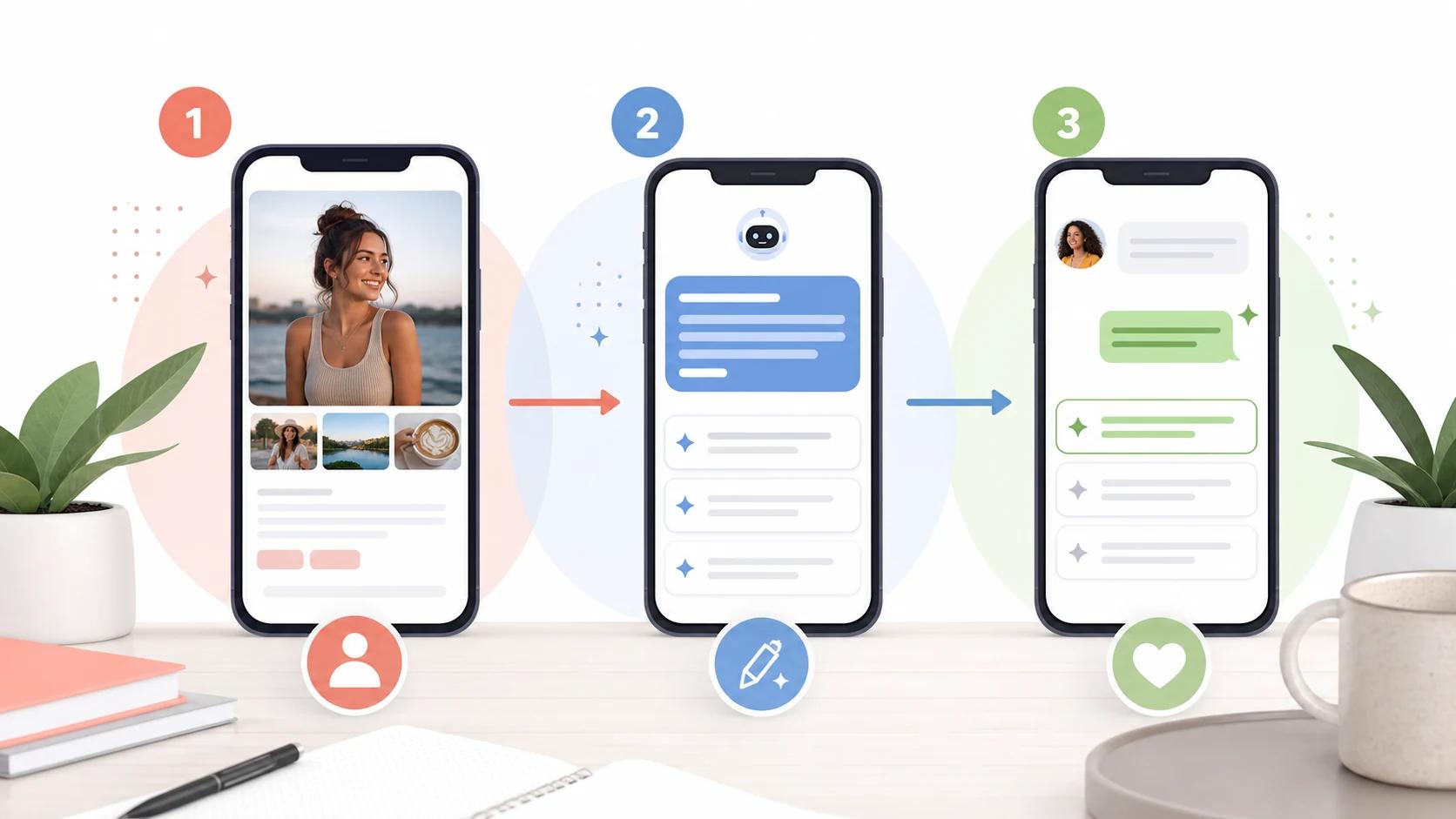
DatingHelpAI treats a Tinder helper as a practical review workflow, not a promise machine. The useful job is simple: make your profile easier to understand, make first messages easier to answer, and help you choose replies that still sound like you.
The workflow can support better decisions at each step, but it cannot control who sees your profile, who replies, or whether a conversation becomes a date. Use it as a second pass before you swipe, send, or ask someone out.
What is a Tinder helper?
A Tinder helper is a tool, checklist, or workflow that helps you review profile signals, write profile based openers, and improve replies in active chats. The best version helps you sound clearer, more specific, and more respectful without pretending to be someone else.
On DatingHelpAI, the public workflow is split into focused tools. You can use the Tinder Helper for the broader Tinder toolkit, the profile analyzer for your own profile screenshots, the dating profile opener for first message ideas, and the AI reply generator when a match has already answered.
For the full companion article, see the existing Tinder helper simple guide to better matches.
How should you fix your profile first?
Start with the profile before you obsess over messages. If your first photo, bio, or profile details are confusing, even a strong opener has to work harder than it should.
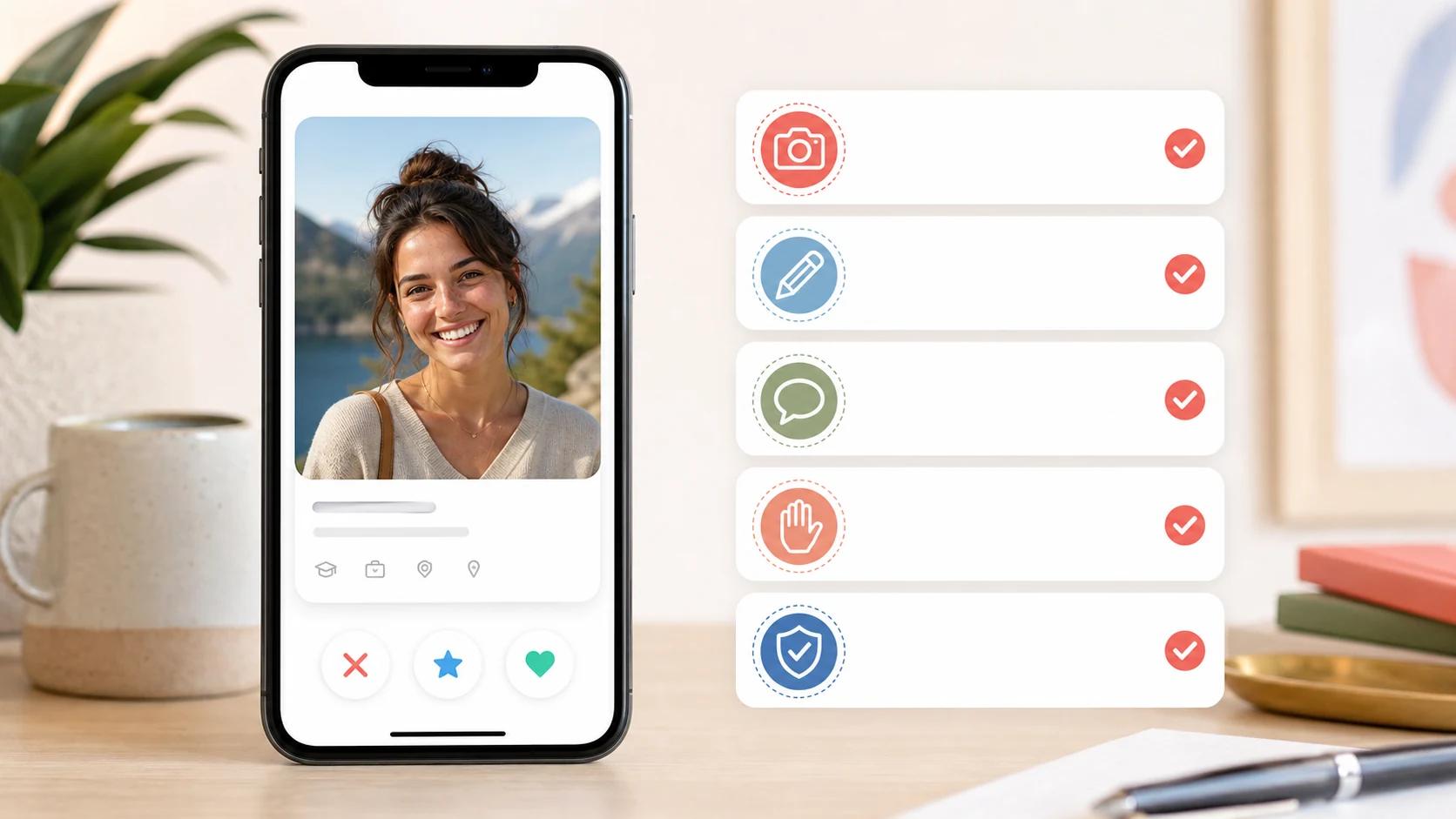
Tinder's own help center says profile fields can include photos, bio, lifestyle tags, interests, pronouns, relationship goals, languages, job, school, city, gender, and sexual orientation. That means a review tool should not only judge one photo. It should look at how the whole profile works together.
Use this order:
- First photo: clear face, current look, good light, and no need to guess who you are.
- Photo mix: one lifestyle image, one social or activity context, and enough variety to avoid five versions of the same selfie.
- Bio: one specific detail that gives a match something easy to mention.
- Fields: interests, relationship goals, and basics should support the same story your photos tell.
How can this tool improve your bio?
This kind of assistant is useful when it turns vague traits into visible details. "Funny, loyal, adventurous" may be true, but it does not give a match much to answer. "Training for a 10K and still negotiating with my knees" gives more texture.
Use this simple bio test:
- Can someone picture one real thing you do?
- Is there one easy question they could ask?
- Does the tone sound like a person, not a resume?
- Would you say it out loud without cringing?
Before you accept an AI rewrite, read it twice. First, check whether it is specific. Second, check whether it still sounds like you. A polished bio that feels fake can create awkward chats later.
How should you write better first messages?
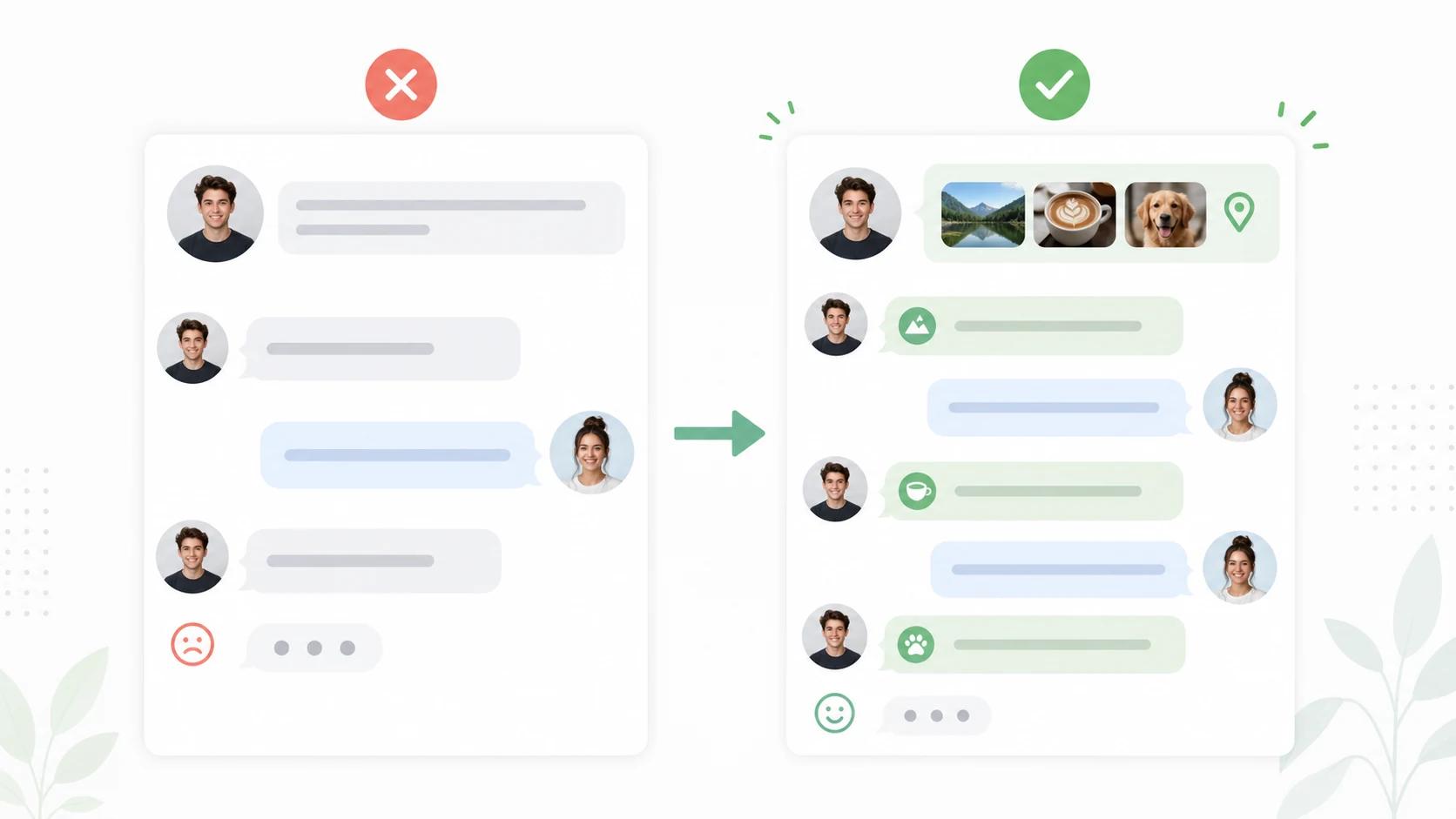
Better first messages usually reduce effort for the other person. A good opener notices one real profile clue and asks a question that is easy to answer.
The dating profile opener is built around that idea: use photos, prompts, bios, and interests as context. It can help you avoid generic openers like "hey" or "how's your day" when the profile gives you something better to use.
Examples:
- Profile clue: ramen photo
Opener: "Important question. Are you judging a ramen place by broth, noodles, or toppings first?"
- Profile clue: hiking shot
Opener: "That trail looks serious. Was it peaceful, painful, or both?"
- Profile clue: dog photo
Opener: "Your dog looks like the one making all the plans. Accurate?"
How can you use AI replies without sounding scripted?
Use AI replies as drafts, not scripts. The assistant can suggest angles, but you should choose the one that fits your actual interest, tone, and comfort level.
When you upload or paste chat context into the AI reply generator, review the suggestion through three filters:
- Accuracy: Does it match what was already said?
- Voice: Would you naturally send something like this?
- Pressure: Does it respect the other person's pace?
If a suggested reply sounds too smooth, simplify it. If it makes a claim you would not stand behind, remove it. If it pushes for a date before the chat has any rhythm, wait.
How do you move from chat to a date respectfully?
Move from chat to a date when there is mutual effort, not just because a script says it is time. A good invite is specific, public, low pressure, and tied to something you already discussed.
Try patterns like:
- "You made that coffee place sound convincing. Want to test your recommendation this week?"
- "This seems like it would be easier over one drink than ten more messages."
- "Since you have strong taco opinions, I may need a local ranking."
Avoid pressure, guilt, and repeated follow ups. If someone does not answer, treat silence as information. Better dating app support should help you communicate cleanly, not push someone past their boundaries.
What should you never outsource to AI?
Do not outsource identity, consent, or judgment. AI can help with wording, but it should not invent life details, impersonate you, pressure someone, or hide dealbreakers.
Keep these lines clear:
- Do not claim hobbies, jobs, travel, or relationship goals that are not real.
- Do not use AI to imitate another person's style or identity.
- Do not send sexual, manipulative, or aggressive messages because a tool suggested them.
- Do not keep pushing after someone says no, slows down, or stops answering.
- Do not share private screenshots beyond what is needed for the task.
DatingHelpAI's role is to help you make better choices inside your real dating life. The final message should still be yours.
How should safety shape your Tinder workflow?
Safety is part of the workflow, not a separate footnote. Tinder's safety guidance says to be cautious with people you do not know, keep personal information private, stay on platform while getting to know someone, meet in public, and report suspicious behavior.
The Federal Trade Commission also warns that romance scammers often try to move conversations off platform, claim urgent problems, and ask for money or gifts. The clearest rule is simple: do not send money or gifts to someone you have not met in person.
Pew Research Center found that online dating experiences are mixed. Many users report positive experiences, but many also report scams, unwanted contact, or harassment. That is why better messages should still be paired with slower trust, public first meetings, and clear boundaries.
What is a simple Tinder helper workflow?
Use a repeatable workflow so you are not rewriting everything after one slow week. The goal is to improve one layer at a time and avoid overreacting to normal dating app randomness.
- Review your profile screenshots with the profile analyzer.
- Replace the weakest profile signal first, usually the first photo or vague bio.
- Save three profile based opener patterns you can adapt quickly.
- Use AI suggestions only after reading the match's profile yourself.
- For active chats, generate reply options and rewrite the chosen one in your voice.
- Ask for a date only when the chat has mutual effort and a natural reason to meet.
- Compare results after a week, not after every message.
For a broader profile and messaging strategy, read the DatingHelpAI guide on how to get more matches on dating apps.
What should you check before sending?
Before you send a message, run a quick final check. This matters more than chasing the perfect line.
- Is the message based on something real from their profile or chat?
- Is it short enough to answer without effort?
- Does it sound like your normal voice?
- Does it avoid pressure, fake urgency, or hidden expectations?
- Would you be comfortable explaining the message in person?
If the answer is no, simplify. A useful assistant should reduce overthinking while keeping the message honest and easy to answer.
FAQ
Is a Tinder helper the same as a pickup line generator?
No. A pickup line generator usually gives standalone lines. A full helper workflow is broader because it can support profile review, profile based openers, active chat replies, and pacing decisions.
Can a Tinder helper guarantee better matches?
No. It can improve clarity and help you avoid common mistakes, but it cannot guarantee matches, replies, dates, or relationship outcomes.
Should I copy AI generated Tinder messages exactly?
Usually no. Treat suggestions as drafts. Keep the useful structure, then adjust the wording so it matches your real voice and the actual conversation.
What is the safest way to use a Tinder helper?
Share only the context needed for the task, avoid adding sensitive personal details, keep the final message honest, and follow Tinder and FTC safety guidance when a conversation moves toward meeting.
Sources
- DatingHelpAI Tinder Helper for current public Tinder tool positioning and workflow context.
- DatingHelpAI AI Reply Generator for reply workflow, screenshot based input, and adaptation guidance.
- DatingHelpAI Profile Analyzer for profile review scope and screenshot guidance.
- Tinder Help Center on editing your profile for current profile field context.
- Tinder Safety Tips for online safety and meeting guidance.
- Pew Research Center on U.S. online dating experiences for user experience, message volume, scam, and harassment context.
- Federal Trade Commission on romance scams for scam warning signs and money safety guidance.
What should you do next?
If your profile is the weak point, start with the profile analyzer. If you already matched, use the AI reply generator and rewrite the best suggestion in your own voice. If you need the first message, use the dating profile opener after reading their profile yourself.
What To Do Next
If this guide helped you diagnose the problem, the next step is to test the right tool on a real conversation, opener, or profile screenshot.
Related Reading
View all articlesDating
Tinder vs Hinge vs Bumble Messaging Rules for 2026
Compare Tinder, Hinge, and Bumble messaging rules for 2026, including who can message first, how matches begin, and how Opening Moves and comments work.
Dating
Dating App Conversation Examples from Match to First Date
See complete dating app conversation examples from the first message to a low-pressure date invite, with notes on replies, pacing, safety, and next steps.
Dating
How to Reply to Dating App Messages with 50 Examples
Learn how to reply to a dating app message with a five-step framework and 50 examples for short answers, compliments, jokes, questions, and date invites.
About this content
Dating Help AI, operated by EasyGlobe, publishes product pages and dating-app workflow content to explain how the public tools work, document the current public product model, and help users apply suggestions with more context and care. For the current product overview and how uploads and comparison pages are handled, review the trust pages below.
The tools provide suggestions, frameworks, and second-pass review. They do not guarantee matches, replies, dates, or relationship outcomes. The content and outputs are educational dating-app guidance, not therapy, legal advice, or professional mental-health support.
Editorial review owner: Luhao Zhao, Founder and Product Lead, Dating Help AI, based in Los Angeles, California, United States. Product and trust-sensitive content is reviewed on a weekly cadence.