Dating App Conversation Examples from Match to First Date
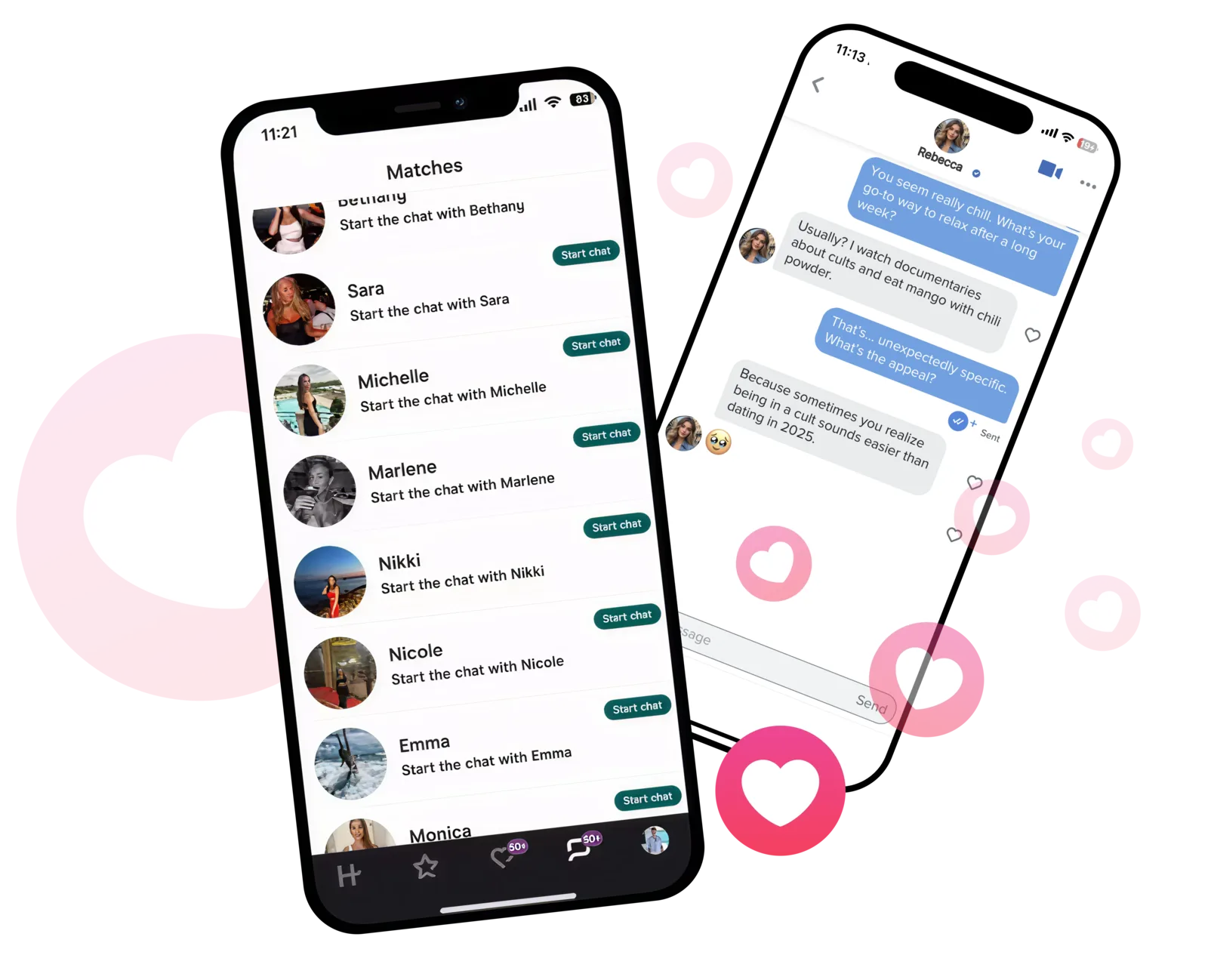
Strong dating app conversations usually move through four stages: a specific opener, a shared topic, a small sign of mutual interest, and a clear but low-pressure invitation. The conversation does not need dozens of messages. It needs enough two-way effort that meeting feels like a natural next step rather than a sudden demand.
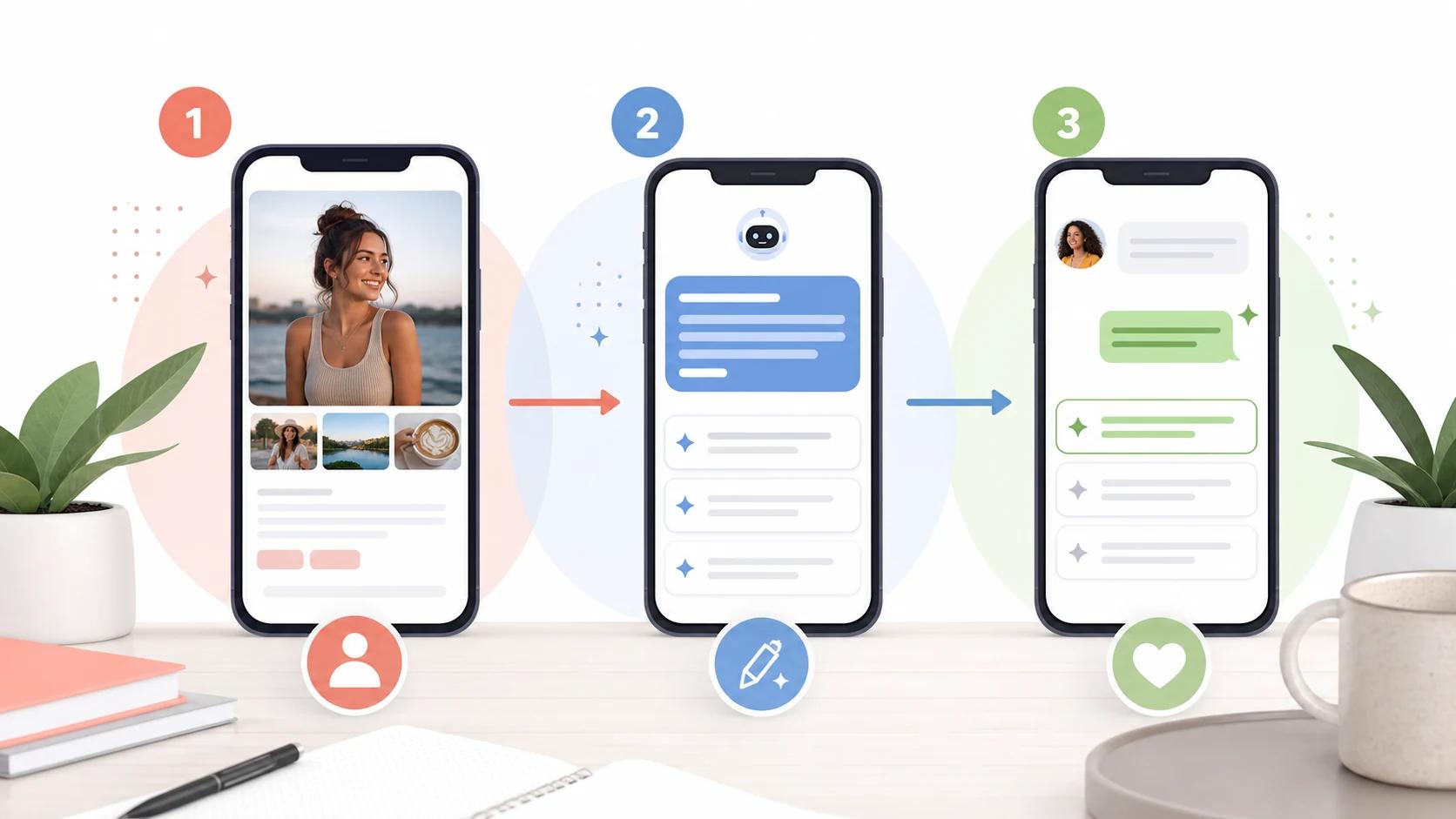
The dating app conversation examples below show complete paths instead of isolated lines. They are fictional and should be adapted to the real profile, chat, and comfort level. If you need help with the message in front of you, use the AI dating reply generator and edit the result into your own voice.
What are the stages of a good dating app conversation?
| Stage | Purpose | Evidence to look for |
|---|---|---|
| Opener | Create a specific first topic | The message uses a profile detail |
| Build | Exchange reactions and information | Both people add more than one-word answers |
| Qualify | Notice mutual interest and comfort | Questions come from both sides |
| Invite | Suggest a simple next step | The plan is specific and easy to decline |
No stage guarantees the next one. A match can stop replying for many reasons, and a good message cannot force compatibility. The goal is clarity and mutual participation.
How can a profile detail become a coffee date?
Profile detail: A photo from a neighborhood bakery.
You: “That pastry photo looks serious. What should a first-time visitor order?”
Match: “The almond croissant, no question.”
You: “Strong confidence. I usually judge a place by the chocolate option, so we may need a comparison.”
Match: “I support a scientific approach.”
You: “Then should we test both over coffee Saturday morning?”
Why it works: The opener uses a visible detail. Both people continue the same joke, and the invitation is tied to the existing topic. It proposes a public, low-pressure plan.
How can a short answer become a better topic?
You: “Your hiking photo looks worth the climb. Where was it?”
Match: “Colorado.”
You: “Nice. Easier question: are you hiking for the view or for the meal afterward?”
Match: “Definitely the meal. I plan the restaurant before the trail.”
You: “That is the correct order. What is the best post-hike meal?”
Why it works: The reply does not criticize the short answer. It replaces a broad question with a playful choice, and the match responds with more detail. One clean reset is enough; if the answers stayed minimal, continuing to push would not help.
How can a shared interest create playful conversation?
You: “I saw the board-game answer. What game reveals the worst side of you?”
Match: “Catan. I remember every trade betrayal.”
You: “Good to know. I will bring snacks and never ask for sheep.”
Match: “That is exactly what someone planning a betrayal would say.”
You: “Fair. We may need a neutral first meeting before entering negotiations.”
Match: “Coffee is neutral territory.”
You: “Coffee Thursday evening?”
Why it works: Both people build the same playful frame. The date invite follows a line the match already offered, so it feels collaborative rather than imposed.
How can you respond to a thoughtful prompt answer?
Profile prompt: “A perfect Sunday is a long breakfast, a used bookstore, and cooking dinner.”
You: “That is an unusually complete Sunday plan. Which section of the bookstore loses you first?”
Match: “Travel writing or cookbooks. You?”
You: “History, followed by buying a novel I did not plan to read. What do you like cooking?”
Match: “Anything that takes too long. Homemade pasta is the current project.”
You: “Ambitious. I can offer moral support and excellent dishwashing skills.”
Why it works: Each reply answers before asking another question. Both people reveal preferences, so the exchange feels like a conversation instead of an interview.
How can a conversation recover after a delayed reply?
Match: “Sorry, work got chaotic and I disappeared.”
You: “No problem. I hope the week calmed down. Did the presentation you mentioned survive?”
Match: “It did, barely. I am finally free this weekend.”
You: “That deserves a less chaotic activity. Want to grab coffee somewhere quiet?”
Why it works: The response does not demand an explanation or punish the delay. It remembers a previous detail and responds to the match’s renewed availability.
If you are the person returning late, a useful version is: “My week got away from me, but I wanted to come back to this. How did your interview go?” Keep the apology short and reopen the actual topic.
How can you move from Tinder, Hinge, or Bumble into a date?
Platform mechanics differ, but the conversational signal is similar: both people are participating. Use the correct tool when platform context matters—the Tinder reply generator, Hinge reply generator, or Bumble reply generator.
You: “You have now recommended that taco place twice.”
Match: “Because it is actually that good.”
You: “I respect the commitment. Want to prove it over tacos Wednesday?”
Match: “Wednesday works after seven.”
You: “Great. Let’s meet there at 7:30. I will send the public location here.”
Why it works: The invitation uses a topic already discussed, offers a concrete day, and confirms the plan without requesting unnecessary private information.
When is a dating app conversation ready for an invitation?
Look for two or more of these signals:
- They answer with detail instead of only acknowledging you.
- They ask questions back.
- They introduce new information without being prompted.
- A joke or topic continues across multiple turns.
- They mention availability, a place, or an activity positively.
These are signs of conversational participation, not proof of romantic interest. Ask once, make the invitation easy to decline, and accept the answer.
How can you keep the first date step safer?
Hinge’s current Safe Dating Advice recommends taking time, watching for red flags, and meeting in a populated public place. Bumble’s meeting guidance similarly recommends chatting first, using verification or calls when useful, meeting publicly, and sharing plans with someone you trust.
Tinder’s messaging documentation confirms that chat begins after a match. Staying in the app until you feel comfortable can preserve platform safety and reporting tools.
Practical first-meeting habits include:
- Choose a public place with staff and other people.
- Arrange your own transportation.
- Tell a friend where you are going.
- Keep your home and workplace private at first.
- Leave if the person pressures you or the situation feels wrong.
What makes a conversation example useful rather than fake?
A useful example shows a decision: why a reply follows the previous message and what the next person can answer. A fake-sounding example relies on polished banter every turn, ignores uncertainty, or assumes every message leads to a date.
When adapting an example, remove any joke you would not say aloud. Replace invented details with facts from the profile or conversation. Use the structure, not the performance.
Dating app conversation FAQ
How many messages should you exchange before a first date?
There is no universal number. Wait for enough mutual effort and comfort that a simple invitation makes sense. Some people prefer more conversation or a call first, and that preference should be respected.
Should every dating app conversation lead to a date?
No. The conversation may reveal incompatible goals, low interest, or different comfort levels. A respectful ending is better than forcing momentum.
Can AI create a complete dating app conversation?
AI can suggest the next message, but it should not fabricate your identity or automate an entire relationship. Use one draft at a time, keep the facts honest, and decide for yourself when to continue or stop.
What To Do Next
If this guide helped you diagnose the problem, the next step is to test the right tool on a real conversation, opener, or profile screenshot.
Related Reading
View all articlesDating
AI Pickup Lines from Profile Photos: Examples and Tips
Turn a dating profile photo into a natural AI pickup line. Compare example openers, edit out assumptions, and learn when to use photo uploads or write manually.
Dating
Best AI Model for Dating Chat in 2026? DatingHelpAI Tested Six
Six AI models for dating chat compared: 576 text outputs, quality scores, first-attempt reliability, latency, image limits, and published prices.
Dating
Tinder vs Hinge vs Bumble Messaging Rules for 2026
Compare Tinder, Hinge, and Bumble messaging rules for 2026, including who can message first, how matches begin, and how Opening Moves and comments work.
About this content
Dating Help AI, operated by EasyGlobe, publishes product pages and dating-app workflow content to explain how the public tools work, document the current public product model, and help users apply suggestions with more context and care. For the current product overview and how uploads and comparison pages are handled, review the trust pages below.
The tools provide suggestions, frameworks, and second-pass review. They do not guarantee matches, replies, dates, or relationship outcomes. The content and outputs are educational dating-app guidance, not therapy, legal advice, or professional mental-health support.
Editorial review owner: Luhao Zhao, Founder and Product Lead, Dating Help AI, based in Los Angeles, California, United States. Product and trust-sensitive content is reviewed on a weekly cadence.